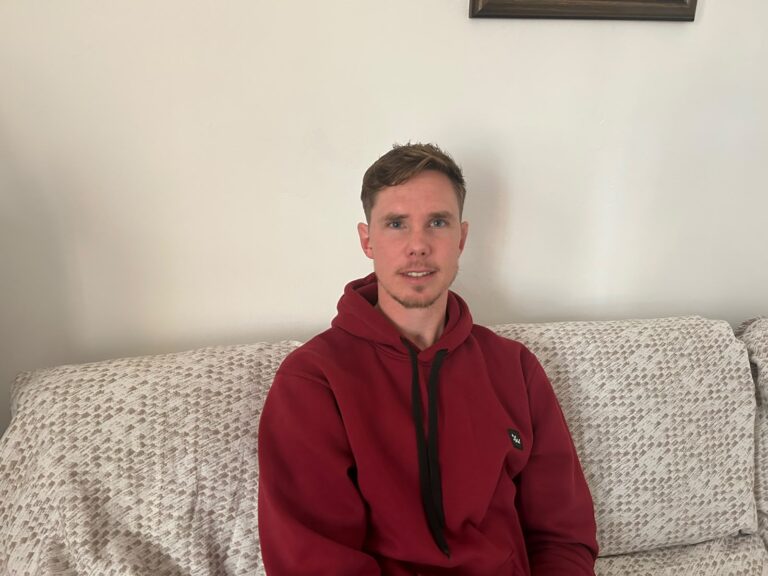
Toxicologist Prof. Dr. Jacob D.e Boer published recently, together with a journalist Rolf Heynen Poison. De Boer and Heynen describe that people these daysPeople regularly come into contact with various types of toxic substances, including PFAS. The dangers ofExposure to PFAS is associated with industry and governments have already for decades known. HThe importance of public healthEid explains it off against economic interestand that are associated with the use of harmful fabricsn.1Poison – Balans Publishing
Just last week, the European Court of Auditors called PFAS a ’ticking time bomb’: healthcare costs resulting from PFAS exposure in Europe are estimated at 52 to 84 billion euros per year.2Court of Auditors Urges EU to Do More to Protect Citizens from PFAS There are in the Netherlands civillegal proceedings and the Public Prosecutor's Office (OM) dothe criminal investigation regarding the intentional release of PFAS. Action is also being taken in neighboring countries, such as the recent human rights proceedings from ClientEarth in Belgium.3Human Rights Complaint Filed Against Belgium Over PFAS "Forever Chemicals" | ClientEarth But there may be more.
What are PFAS?
PFAS stands for per- and polyfluoroalkyl substances, a collective term for thousands of man-made chemicals. Since the 1940s, de fabrics applied apartongoing industries because of the unique features. For example, the fabrics used in the textile industry for water-repellent clothing, and in food packaging because grease-resistant properties; in the chemical industry for certain coatings and lubricants; and in the electronics industry in the production of semiconductors. PFAS are also used in fire-suppressant foam, nonstick coatings, certain medical devices, and cosmetics.
Many PFAS are persistent. Furthermore, some substances can accumulate in the human body. For example, the half-life of certain PFAS is in the blood for several years. This means it can take years before the the amount of a substance in the body is half decreased.4Rosato I, et al. Estimation of per- and polyfluoroalkyl substances (PFAS) half-lives in human studies: a systematic review and meta-analysis. Environmental Research. 2024;242:117743. doi:10.1016/j.envres.2023.117743.
How do PFAS enter our bodies?
Exposure to PFAS occurs primarily through food and drinking water. PFAS can enter agricultural products from contaminated soil and surface water, eggs, fish and ultimately in our diet.
Drinking water is also a major route of exposure. In September 2026, Greenpeace published The Netherlands An analysis showing that more than one-third of the Dutch population receives drinking water in which PFAS concentrations exceed the RIVM’s health advisory level. Elevated concentrations were found particularly in the western part of the Netherlands found.5PFAS in Tap Water: Check the Water in Your Town – Greenpeace Netherlands
It is noteworthy that drinking water nevertheless to can comply with applicable legal standards: dThe RIVM's public health advisory value is stricter than the legal standards. According to the RIVM, tap water remains safe to drink, but Dutch people consume more PFAS through food and drinking water than is desirable from a health perspective is.6Risk Assessment of PFAS Exposure Through Food and Drinking Water in the Netherlands
WaWhat are the consequences for our health?
PFAS can affect various processes in our bodies. EéOne of the effects examined is disruption of the immune system. Research shows that exposure to certain PFAS is associated with reduced antibody production following vaccinations, especially in children.7Grandjean P, et al. Serum Vaccine Antibody Concentrations in Children Exposed to Perfluorinated Compounds. JAMA. 2012;307(4):391–397. doi:10.1001/jama.2011.2034. As a result, protection against infectious diseases may decrease.
In addition, higher concentrations of certain PFAS in the blood have been linked to elevated cholesterol levels and changes in liver enzymes. There is also scientific evidence of a link between exposure to specific typees PFAS and kidney cancer.8Shearer JJ, et al. Serum Concentrations of Per- and Polyfluoroalkyl Substances and Risk of Renal Cell Carcinoma. Journal of the National Cancer Institute. 2021;113(5):580–587. doi:10.1093/jnci/djaa143.
There is also evidence of effects on fertility, the growth of unborn children, and the development of pregnancy complications, such as preeclampsia, a serious blood pressure disorder that develops during pregnancy. However, the strength of the evidence varies by PFAS-type and by health effect. The link to lower birth weight, in particular, has been relatively well studied.
From recent Dutch research it turns out that PFAS are located in the body of newborn babies. In July 2026, the RIVM published the results of A nationwide study of breast milk from 1,629 women. PFAS were detected in all samples tested. In 18%, the concentration exceeded the public health risk limit.9PFAS in Breast Milk from Dutch Women | RIVM PFAS can be transmitted through the placenta during pregnancy and through breast milk after birth transferred.10Van Beijsterveldt IALP, et al. Exposure to poly- and perfluoroalkyl substances (PFAS) through infant feeding in early life. Environment International. 2022;164:107274. doi:10.1016/j.envint.2022.107274. In particular, the potential impact on the developing immune system warrants attention.
A health risk that will persist for years to come
The problem with PFAS is that exposure is not easy to prevent. Even if production and emissions are reduced, many of these substances can remain in the environment for decades.
Scientific knowledge about PFAS is growing, but there are still significant uncertainties regarding the effects of long-term exposure to mixtures of different PFAS. Precisely because exposure can begin even before birth, it is crucial to limit the amount of PFAS in our environment.
Legalaknow against DuPont/ Chemours
On September 4, 2023, the attorney presented Bénédicte Ficq on behalf of approximately 2.400 people filed a complaint against the chemical company Chemours (formerly: DuPont) at the Public Prosecutor's Office. The complaint is directed against the company and its managern and concerns the intentional air, messengerm or Release of harmful PFAS substances into surface water. In response to this report, the Public Prosecutor's Office has launched a criminal investigation against Chemours started.11Public Prosecutor's Office Launches Investigation Against DuPont/Chemours | Public Prosecutor's Office
Dthe municipalities of Dordrecht, Papendrecht, Sliedrecht, and Molenlanden claim that they have suffered damages as a result of emissions from the factory in Chemours by contamination of municipal land. On the 2nd7 In September 2023, the Rotterdam District Court issued an interim ruling stating that the emissions during a certain period were unlawful was.12Chemours Acted Unlawfully Regarding PFOA Emissions | Case Law This procedure will be continued.
It went into the municipalities' procedure explicitly not about damage from their residents. The PFAS-Free Foundation has therefore filed a class-action lawsuit on behalf of 550.000 residents living near Chemours. Deze lawsuit must lead to fixedgesetd that Chemours is liable for damage resulting from PFAS contamination and dat Stop emissions as soon as possiblet.
In addition, the Dutch Fishermen's Association against 3M, a major polluter in Belgium, regarding compensation for damages resulting from various types PFAS.13PFAS Contamination – Fishermen's Association
Alternative route
In addition to the ongoing civil proceedings is a third path conceivable: the legal enforce adequate water treatment. The European standard for PFAS in drinking water requires that water utilities are investing in (precious) filters and other measures to remove PFAS from the water. The costs that water utilities incur to treat water are now passed on to customers.
From Jacob dFrom the farmer, we understood that whatIn the Netherlands, wastewater is typically treated using carbon filters and ion exchangers. Membrane filters are significant effectiefar, but the technology is for various reasons more expensive. As far as is known, in the Netherlands only Oasen Water Company Membrane Filter Systems put into service. Vewin, the Association of Water Companies in the Netherlands, also emphasizes that addressing the source has proven effective in preventing PFAS from entering the environment and drinking water. They advocate for identifying and reviewing permits for PFAS discharges so that these discharges can be reduced as quickly as possible.14PFAS in drinking water sources
In the Verenigide The States successfully recovered damages from water utilities on to Chemours15$1.185 Billion Settlement with DuPont, Chemours, and Corteva | Napoli Shkolnik PLLC affiliated companies and 3M16$12.5 Billion Settlement with 3M Company | Napoli Shkolnik PLLC by Napoli Shkolnik, a lawyersoffice where we work with. The It stands to reason that Dutch water utilities the costs of (early) replacement of filters and other measures stories on Chemours; that's the only way will be not paying too much for tap water and receives the polluter He was held accountable for his behavior.
Want to participate?
In response to the recent analysis of PFAS in drinking water, Greenpeace The Netherlands started a petition who advocates for a nationwide ban. By signing, you can have a direct impact on this important issue.
This blog was written by Nadim Abdalla, Puck van Maanen, Hendrikje Melief and Bojan Dekker. Abdalla, Van Maanen and Dekker work as lawyers at Beer advocaten, Melief is like medical advisor affiliated with the firm.
- 1
- 2
- 3
- 4Rosato I, et al. Estimation of per- and polyfluoroalkyl substances (PFAS) half-lives in human studies: a systematic review and meta-analysis. Environmental Research. 2024;242:117743. doi:10.1016/j.envres.2023.117743. ↩︎
- 5
- 6
- 7Grandjean P, et al. Serum Vaccine Antibody Concentrations in Children Exposed to Perfluorinated Compounds. JAMA. 2012;307(4):391–397. doi:10.1001/jama.2011.2034. ↩︎
- 8Shearer JJ, et al. Serum Concentrations of Per- and Polyfluoroalkyl Substances and Risk of Renal Cell Carcinoma. Journal of the National Cancer Institute. 2021;113(5):580–587. doi:10.1093/jnci/djaa143. ↩︎
- 9
- 10Van Beijsterveldt IALP, et al. Exposure to poly- and perfluoroalkyl substances (PFAS) through infant feeding in early life. Environment International. 2022;164:107274. doi:10.1016/j.envint.2022.107274. ↩︎
- 11
- 12
- 13
- 14
- 15
- 16