
Cases that matter

Recognition without compensation: Balinese bereaved families fight for what is rightfully theirs

During the Indonesian War of Independence, countless Indonesian men were executed without trial by Dutch soldiers. The Dutch state has since acknowledged that systematic and extreme violence and publicly apologized for it. Yet the surviving relatives of these men - now in their elderly years - are told that they are not eligible for compensation. Linde Mayer assists thirteen of them. What happened In the Indonesian War of Independence (1945 - 1949), the Dutch army conducted operations in which Indonesian men were summary executions. No charges, no defense, no verdict. The victims were killed on the spot. In many cases, their deaths were not documented. Decades later, the Dutch State established the regulation ‘Contours of civil law settlement to compensate children of victims of summary executions in the former Dutch East Indies. This regulation allows children of executed men to apply for compensation. Our clients made use of that possibility. Their requests were denied. The impact The men who were executed left behind children. Those children grew up without a father, without an explanation and without any recognition of what was done to their families. Many have carried the consequences with them throughout their lives. Therefore, the rejection of their requests affects them not only financially, but especially in what is really important to them: recognition. Recognition that they have been wronged, and that this injustice has had lasting consequences. The State says it recognizes that injustice. Its application shows otherwise. An unfeasible burden of proof The heart of the problem lies in the standard of proof used by the scheme. To qualify for compensation, relatives must prove that their father's execution was mentioned in published, public sources. That is precisely where it goes wrong: summary executions were often not documented or not recognizably documented at the time. Consequently, in many cases, they cannot be found in the sources called for by the settlement. The State acknowledges that these executions took place, but at the same time demands evidence that is usually not there. This puts relatives in an impossible position of proof. What Beer advocaten does We have asked the State to enter into consultations in the short term. Those consultations have two goals. The first is to review the standard of proof. In its current form, it excludes precisely the group for which the rule is intended. Second, we want to discuss with the State what evidence is available and how it can be carefully considered. We await a response from the State. If consultation does not lead to a solution, our clients will consider further steps. The urgency is great. All survivors are at an advanced age. If the assessment of their requests takes too long, the settlement risks overshooting its goal. How Linde Mayer looks at this case ’What touches me in this case is the fundamental contradiction in the State's position. On the one hand, the Netherlands acknowledges that there has been systematic and extreme violence


Ten years of MH17: the struggle for recognition and justice

On July 17, 2014, flight MH17 crashed over Ukraine. All 298 occupants were killed. Among them were 196 Dutch nationals. For the bereaved families, a period of loss, uncertainty and years of struggle for truth, recognition and justice began. What happened and the impact on people and society Investigation by the Dutch Safety Board and the international Joint Investigation Team revealed that flight MH17 was brought down by a BUK missile. According to that investigation, the installation had been transferred to the area from which the plane was fired shortly before the disaster. To date, Russia denies any involvement. For the bereaved families, the impact of the disaster is enormous. Some lost their entire family in one fell swoop. For many families, not only was a loved one taken away, but also a foundation of daily life. That Russia continues to deny any involvement and does not share truthful information makes the loss for bereaved families even heavier. Questions remain. Was it a mistake? Did they think they were shooting at a military aircraft? Precisely because answers are not forthcoming, many bereaved families find it difficult to conclude their grieving process. The disaster also left deep scars in the Netherlands. Because of the large number of Dutch victims, MH17 became an event that not only affected individual families, but the disaster is also part of Dutch history. The interests at stake In this case, the interests of the relatives are paramount. They want recognition for what happened to them, clarity about the facts and accountability of the responsible parties. In addition, the case touches on broader questions about international legal order and legal protection. For surviving relatives it is of great importance that not only nationally, but also internationally is pronounced what has been established and what responsibility this entails. For whom Beer advocaten stands up We represent the interests of nearly 300 surviving relatives of more than 100 victims of flight MH17. We do so in various proceedings, nationally and internationally. Our commitment from the beginning has been to use all possible legal routes that could contribute to recognition, truth-telling and justice for our clients. The legal approach and challenges The legal approach had three tracks, in the order in which they played out: negotiations with the Malaysia Airlines insurer, a complaint to the European Court of Human Rights, and criminal proceedings. First, negotiations were conducted with the Malaysia Airlines insurer on behalf of next of kin. As a carrier, the airline bears its own liability under aviation law. On the basis of those negotiations, compensation amounts were paid for our clients. A complaint was then filed with the European Court of Human Rights against Russia on behalf of relatives. That was not an obvious step. There were also noises that this route would have little chance of success. Nevertheless, we filed that complaint because we felt that this route should be taken. The criminal proceedings had exceptional challenges. It involved a very large group of relatives, with different nationalities and different needs. In a regular criminal case, there is often direct and individual contact with clients.

A painkiller that hurt: how Vioxx users got even

Around the year 2000, pharmaceutical company Merck launched the drug Vioxx. A painkiller that quickly became popular and just as quickly proved dangerous. The company knew even before Vioxx was produced for patients that using this drug significantly increased the risk of heart and brain attacks. But it didn't warn about that. Not in the package insert and not to the authorities who had to approve Vioxx. In 2004, Merck took Vioxx off the market worldwide. It was one of the largest recalls in pharmaceutical history. By then, our clients had already suffered a stroke. Victims in the Netherlands, settlements in America We acted for a large group of Dutch victims. People who had taken Vioxx and then suffered an infarction. Some suffered permanent damage to their health. In America, Merck reached settlements with victims. In the Netherlands, the company did not want to come to the table. Merck made it public that it would not settle because of Vioxx. Outside America, they did so in few countries. We continued. Thousands of files, one decisive piece of evidence There were two crucial things to prove. First: that the infarction had been caused by Vioxx, and not some other cause. Second: that Merck knew about the increased risk before the market launch. Through the courts, we demanded Merck's internal research documents. In a room, we searched through thousands of binders for what was not in the package insert. Finally, we found the reports from the research phase, prepared before Vioxx came on the market. These showed that Merck knew the drug worryingly increased the risk of infarction. The company had not shared that information with regulators. The road to the negotiating table To establish Merck's liability judicially as the basis for a settlement, we selected several clients in the group as litigators. Their cases were a model for the rest. The decisive step toward Merck was taken by a lawyer from our international network. Without that opening, the negotiations would not have got off the ground. This shows the importance of international contacts in cases with a foreign counterparty. Retrospective “The fact that perseverance wins certainly applies to this case,” says Christa Wijnakker. “Merck had made it public that they would not settle because of Vioxx, and have done so in few countries outside America. It hit me that Vioxx was taken off the market in 2004 because of the risk of infarction, and the failure to warn about it. And that Merck did not want to take responsibility towards Dutch victims for a long time after that.” Do you have questions about this case? Please contact Christa Wijnakker.

Bubble bath, bacteria and a vanished foundation: the West Frisian Flora's legionella case

Between February 19 and 28, 1999, thousands of people visited the Westfriese Flora in Bovenkarspel, then the largest flower exhibition in the world. What was supposed to be a day out turned into a disaster. Some 318 visitors became infected with the legionella bacteria. At least 32 of them did not survive. What happened Part of the Flora was a consumer trade show, which included hot tubs on display. Legionella bacteria had developed in one or more of those baths. The exhibitor had not added chlorine to the water. The reasoning: no one would sit in the bath anyway. That reasoning turned out fatally. Legionella bacteria spread through water droplets in the air. Walking along the bath was enough to become infected. Legionella-induced Legionnaires' disease was diagnosed in about 318 visitors. The disease caused permanent lung problems. At least 32 people died from the effects. Many of those affected were from the West Friesland region. The community as a whole felt affected. Enforcing recognition At the request of the Consumers' Association, Beer advocaten took up the case for all victims and surviving relatives. The exhibitors who owned the contaminated hot tub were held liable. The Westfriese Flora itself and the Dutch State were also sued, arguing that not enough had been done to identify the danger of legionella and take measures. The Alkmaar District Court rejected the claims against the Flora and the State in 2002. It found that only the exhibitors had acted unlawfully. All parties appealed. Three problems of proof The case had a number of intractable obstacles. The first was medical: was it possible to become infected simply by walking past the hot tub? That had to be substantiated. The second was factual: How do you prove that visitors had actually been at the Flora? Many victims had bought their tickets in cash and had not kept them. Smartphones did not exist in 1999; there were hardly any photographs. The third problem was financial and unexpected. A defunct foundation The insurer of the liable exhibitor had paid out the full sum insured. Just not to the victims. The money, nearly 600,000 euros, had been placed in the Talpa Foundation, based in the eastern part of the country. The foundation had been set up by the stand holder and his insurer, ostensibly for the benefit of the victims. Its existence had been kept secret for years. When the Consumers' Association discovered the existence of Stichting Talpa, it initiated summary proceedings. The Zutphen District Court ordered the foundation to enter into consultation with the Consumers' Association within three months and determine a compensation scheme. An independent administrator was appointed. That administrator determined that the money in the foundation could no longer be found. Insurer pays again After talks with the insurer, Nationale-Nederlanden decided on a second payment, this time directly for the benefit of the victims, plus interest. An independent board reviewed the individual claims. Victims who could prove that they had been infected on the Flora and had suffered damages that had not already been compensated in other ways were eligible for payment. In the case of personal injury claims,

Fight for recognition for Q fever victims

Between 2007 and 2010, the Netherlands was hit by the largest Q fever epidemic in the world. Thousands of people became infected by a bacteria spread by goats. The consequences were enormous: an estimated 115 deaths and thousands seriously ill. Many victims still experience the effects of the infection on a daily basis. What happened and the impact on people and society The Q fever outbreak left deep scars. Many victims suffer permanently from severe fatigue, concentration problems and heart problems. Working or even leading a normal social life is no longer possible for many. Families were also badly affected: partners became informal caregivers, children saw their parents completely exhausted. In addition to personal suffering, there was social unrest about the role of the government: why did it take so long to intervene? The interests at stake The heart of this case touches on trust in government and the protection of public health. Victims feel that the State did not protect them sufficiently and took measures too late to stop the outbreak. The government invoked limited knowledge and discretion, but the question is: what did the State know at the time, and could faster action have prevented thousands of infections? For whom Beer advocaten stands up Beer advocaten represents more than 250 Q fever victims who are fighting together for recognition and compensation. We assist this group in their appeal against the Dutch State. Our commitment is not only legal, but also moral: victims must not suffer once again - this time from a system that refuses to acknowledge its negligence. The challenge: government liability The legal challenge is great. After all, the government has a certain freedom to make decisions based on the knowledge available at the time. Accordingly, the District Court of The Hague previously ruled that the State was not liable. In our opinion, the State already had sufficient information at the time to intervene more quickly. By not doing so, the State acted unlawfully. The plan of approach In the appeal we carefully map out what the government knew about the risks of Q fever and what measures would have been possible. We build up the file step by step, with the aim of convincing the court that the court's verdict was incorrect. The case is still ongoing - but the stakes are clear There is no appeal ruling yet. First it must be determined that the State is liable. Only then can the individual damages for each victim be assessed. The proceedings are expected to take years, but the determination among the victims is strong. As Caroline van Kessel, president of Q-uestion, said, “The court ruling was disappointing, but we are not giving up. The lives of Q fever victims have changed dramatically. With Beer advocaten, I feel we are well supported legally and are not alone in our struggle for recognition.” What really matters For Beer advocaten, this case is more than a legal battle. The

Mass damage from toxic waste dumping

What happened. In 2006, on behalf of the oil company Trafigura, a large amount of toxic waste was shipped from Amsterdam on the ship Probo Koala. After processing proved impossible in the Netherlands, the waste was taken to Ivory Coast and illegally dumped in open dumpsites in the city of Abidjan. Thousands of residents were exposed to harmful fumes and chemicals. The consequences were severe: health complaints, deaths and permanent environmental damage. The impact on people and the environment The Probo Koala disaster left a trail of devastation. In the neighborhoods around Abidjan, families suffered from nausea, respiratory problems and chronic illnesses. The environment was also badly affected: soil and groundwater became contaminated, affecting agriculture and drinking water supplies for years. This case painfully demonstrates how transboundary environmental damage particularly affects vulnerable communities, often far out of sight of the perpetrator. The role of Beer advocaten Beer advocaten assists the Victimes des Déchets Toxiques Côte d'Ivoire Foundation, which stands up for thousands of victims of the waste dump. We litigate on their behalf in the Netherlands against Trafigura, seeking recognition and compensation. Our involvement goes beyond legal representation: it is about restoring trust in the law. Because when a multinational causes damage elsewhere, it should not go unpunished. Legal challenges and strategy The Probo Koala case is legally complex. The facts took place partly in the Netherlands and partly in Ivory Coast, which raised questions about jurisdiction and applicable law. Initially, the Foundation was declared inadmissible in its claims. In 2020, however, the Amsterdam Court of Appeal ruled that Trafigura does have to answer in the Netherlands. The court recognized that the Dutch courts had jurisdiction to hear the victims' claims, a ruling that was upheld in the Supreme Court. Our approach was step by step: carefully substantiate that Trafigura had interfered with the transport of waste from the Netherlands, and then establish that victims were therefore entitled to access the Dutch courts. Interests and significance The case touches on fundamental values: human rights, environmental law and corporate responsibility. Beer advocaten represents not only the interests of the victims in these proceedings, but also the broader interest that companies be held liable for environmental damage wherever it occurs. The court's ruling has significance for future cross-border environmental cases. It confirms that the Netherlands cannot look away when decisions are made from here that cause great harm elsewhere. What this case shows The Probo Koala case shows that mass damage is not always domestic, but that justice must apply universally. Beer advocaten continues to advocate for communities affected by environmental damage anywhere in the world. Do you want to take on those who cause environmental damage? Do you want to use the law on behalf of a collective to protect victims and their environment? Beer advocaten supports citizens' initiatives, interest groups and NGOs in their struggle. Not only legally, but also strategically and organizationally. If you have questions about this, please contact Bojan Dekker.

Calls

What concerns us

Sick of social media: can the platform be liable?

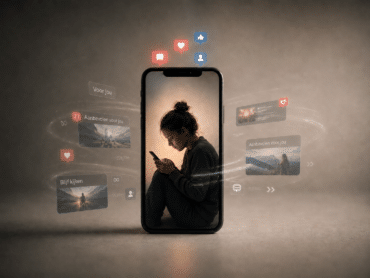
Last March, a Los Angeles jury reached a historic verdict: it held Meta and Google liable for a woman's social media addiction. The judge awarded damages totaling six million dollars, including three million as compensation for the harm done and three million in punitive damages (intended to punish the defendant), because the jury found that both companies had acted with malicious intent. Meta was responsible for seventy percent of the damages, Google for thirty percent.[1] This is the first time a jury in the United States has awarded this type of damages to an individual user in a liability suit against a social media company. How does social media make us addicted? That social media addiction exists is now widely recognized. Platforms are built to keep users glued to the screen for as long as possible: infinite scroll, notifications, likes: all design incentives and algorithmic recommendations that constantly cater to human tendencies. Research by Bits of Freedom, published in March 2026 and funded by the Creative Industries Incentive Fund, mapped those mechanisms. The researchers identified nineteen specific design types that facilitate online addiction, including endless scroll, gamification, social pressure and temporary content.[2] Bits of Freedom concluded that these are not accidental side effects, but all conscious choices by these social media platforms. Everything is set up with only one goal: addiction. Social media addiction is not yet recognized as a mental illness in the Netherlands,[3] which does not make the phenomenon any less real. That social media can cause damage is at least already visible in the Netherlands. Newcom's National Social Media Research 2026, conducted among more than six thousand respondents, shows that 2.6 million Dutch people feel less happy because of social media. 5.5 million are trying to reduce their use. Newcom sees a clear connection: more intensive use goes hand in hand with lower physical and mental well-being and greater demand for care.[4] Is there any legal action to be taken against these platforms in the Netherlands? The American ruling has no direct effect in the Netherlands. But it illustrates something that will also become legally relevant here: that platforms can be held responsible for the damage their products cause. In Europe, there is a legal basis for liability. Since Feb. 17, 2024, the Digital Services Act (DSA) has been in effect. This regulation requires large platforms to identify and mitigate the risks of their own algorithms. The AI Act, many of whose rules take effect on Aug. 2, 2026, additionally imposes obligations on systems that generate or recommend content. Further regulation is also expected from the upcoming European Digital Fairness Act in this context. Bits of Freedom suggests that this regulation should explicitly regulate addictive design, with an emphasis on autonomy and consent as a starting point. Consider, for example, the possibility for users to turn off addictive features. The first results of this legislation are already visible. On Feb. 6, 2026, the European Commission made a preliminary determination that TikTok, with its addictive design, potentially violates the DSA. In doing so, the Commission mentioned exactly the mechanisms that have been in the public debate

Tobacco industry demands protection from itself

“More regulation is needed to protect children from nicotine use,” said Philip Morris (https://www.pmi.com/markets/netherlands/nl/over-ons/onze-visie). What is one of the largest tobacco companies saying here? Get more regulation to protect your children from our products. I had to let this sink in for a moment. PMI knowingly produces products that it itself says need more regulation. And why? So that the smoke-free generation can be realized. One interesting bit relates to adult smokers: “Adult smokers, as far as we are concerned, should be given the opportunity to be well informed about better choices than continuing to smoke cigarettes. That way they can make an informed choice and the smoke-free generation can actually be achieved.” PMI, how about a fund to pay for cessation programs? How about a discouragement policy? How about making vapes unattractive so young people don't start nicotine use? How about a fund to allow doctors to provide paid education in schools. You know those doctors who now do that on their own time. How about using your lobby (you know those thousands of non-contributing profiteers in the service of your industry, flooding Brussels) (https://npo.nl/start/video/de-tabakslobby/meer-informatie) differently or not at all? Your tentacles in politics reach far, you sit in each other's laps. The appointment of Ole Heil as Director of External Affairs on May 9, 2023 speaks volumes. Ole Heil comes from VWS and in your statement you call it a logical move. Smoking is harmful to health, you say, and you are in favor of a smoke-free generation. How about speaking out against selling smokes and vapes in stores where children like to go, such as the Primera? That store owned by your industry for 40%... Granted that's not Phillip Morris, maybe you were able to break free from the ashes of evil after all. We are three years into Ole Heil's tenure. Let's see what exactly has PMI accomplished? Pointer: “Pointer's data research shows that the tobacco industry is opening tobacco stores right next to the supermarket. In fact, 83 percent of Philip Morris-backed tobacco stores are within 100 meters (https://pointer.kro-ncrv.nl/hoe-de-tabaksindustrie-de-effecten-van-het-supermarktverbod-om-zeep-helpt). and “About one-third of new tobacco stores in the Netherlands opened with Philip Morris support. The tobacco giant finances large parts of the store's furnishing or remodeling, provides training to store staff on the benefits of heated tobacco, and provides support by sending representatives who inform customers about (tobacco) products. This revealed Distrifood in 2024.” How exactly does this relate to your message on your website? It doesn't? Oh you still want to keep making money with your sickening products and get a new generation addicted, because that is your revenue model, as you yourself say in the Pointer broadcast. I therefore interpret your appeal as a request to the government. A request that is sometimes made in court after a murder.

When is the government going to help parents protect their children from the tobacco lobby?

“If you don't start smoking before you turn 18 we will pay for your driver's license” A promise made by my parents. My parents were not the only ones, many of my friends were given a similar promise. It was known even then that a cigarette has no function other than to addict and consequently cause cancer and other terrible diseases. As parents, you want to protect your children, especially from one of the greatest dangers lurking and causing lasting damage, the tobacco lobby. A very small contribution was then made by the government ... a Sire advertisement saying “but I don't smoke.” You may remember it. ‘But I don't smoke’... the message was: your child could do the oddest antics, as long as he didn't smoke, because that was even worse https://www.youtube.com/watch?v=6JiBM0_BvCo. If only we could eliminate the cigarette completely or at least leave it completely out of every child's sight. Surely we must have learned from that. After all, prevention is better than cure. Twenty years later, the tobacco industry has nevertheless found a new way to young people. A new avenue that is even more addictive and once again gives parents headaches and sleepless nights. “I usually take another lurk in the middle of the night. By now I don't need to explain what is meant by this by young people https://www.rtl.nl/nieuws/binnenland/artikel/5541842/nederlandse-tieners-zo-verslaafd-dat-ze-s-nachts-wakker-worden-op. The government is letting it happen again. Despite the international obligation to put the best interests of children first in its decision-making virtually no action. Didn't the government have the ambition of a smoke-free generation...Weren't they going to take measures to protect young people? (https://www.rijksoverheid.nl/actueel/nieuws/2022/12/02/extra-maatregelen-voor-rookvrije-generatie). Is it at all an option for the government to protect children or an obligation? To ask the question is to answer it. The RIVM recently conducted another study https://www.nu.nl/binnenland/6394401/rivm-wil-na-smaakjes-ook-aantrekkelijke-kleuren-weghalen-van-vapes.html. Bright colors make vapes more attractive just like flavored vapes... The article also states that the shape of the vape affects its attractiveness and the vape is seen as a fashion accessory... Really...? What shocking results. Any marketing expert, or rather anyone who has ever done anything with marketing, or rather anyone, could have told you this. But maybe the government has finally seen the light? Is it finally adopting a system, where children are actually going to be actively protected from the tobacco industry? In my previous blog, I wrote about the tobacco industry's shrewd sales strategy https://www.linkedin.com/feed/update/urn:li:activity:7442964844363972608/. Perhaps in a few years the RIVM will come to the ”shocking‘ conclusion that the tobacco industry's stooge, the Primera, is also influencing the attractiveness of vapes for young people. Stressed again: the Primera concept is 40% owned by the tobacco industry. The tobacco industry easily moles its way into the brains of our children. Viewers of ’Who is the mole‘ will think: if the hints become so obvious then it's not fun anymore. But the government seems to have a blind spot. Or simulate a blind spot,